

NIKKEI Legacy 2026 | Monument Honoring 126,000 Japanese Americans Incarcerated During World War II to be Erected at Columbia Park | Torrance City’s Groundbreaking Ceremony Takes Place on Monday, November 23 with Several Hundreds
TORRANCE — Community leaders, elected officials, Japanese American advocates, and local residents gathered at Columbia Park on November 23 for the groundbreaking ceremony of the World War II Japanese American Incarceration Monument, a landmark project that will commemorate the approximately 126,000 people of Japanese ancestry who were forcibly removed and incarcerated by the U.S. government during World War II.
The ceremony featured traditional taiko drumming by UnitOne of Asano Taiko U.S., followed by remarks from Torrance Mayor Sharon Kalani and distinguished guests including California State Assemblymember Al Muratsuchi, U.S. Representatives Maxine Waters and Ted Lieu, Consul General of Japan in Los Angeles Kosei Murota, and leaders of the monument project.
In her address, Mayor Kalani reflected on the wartime incarceration of Japanese Americans, noting that many were U.S. citizens who lost their homes, businesses, livelihoods, and constitutional rights solely because of their ancestry. She emphasized the importance of preserving this history and ensuring that future generations understand the lessons of intolerance, injustice, and the importance of civil liberties.
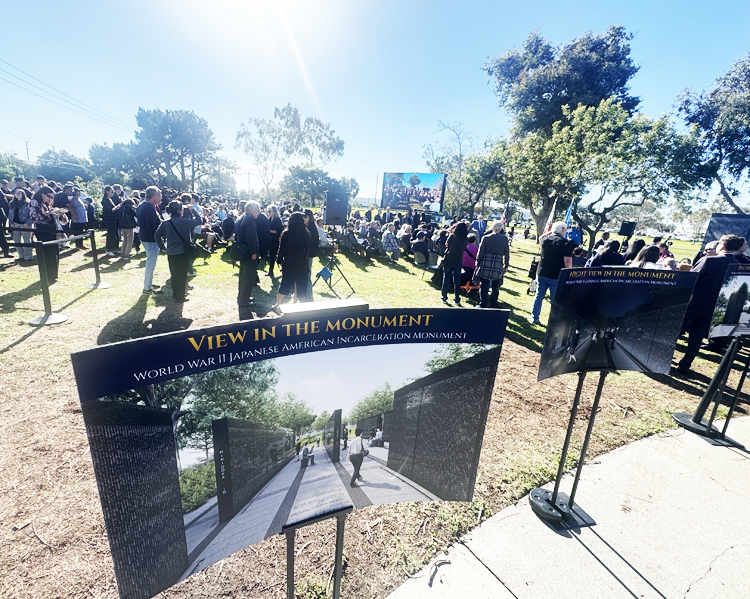
“When completed, the monument will have the names of approximately 126,000 individuals inscribed on beautiful black granite walls,” Kalani said, describing the memorial as a lasting tribute and a place for reflection on civil rights, justice, and constitutional freedoms.
The monument, designed by architecture firm Chee Salette of Glendale, will feature the names of every individual incarcerated during World War II, restoring identity and dignity to those whose lives were profoundly affected by government policies rooted in wartime prejudice. Kalani also recognized the contributions of the Irei Project team, whose efforts have helped document and honor each individual by name.
A major milestone for the project came through the efforts of Assemblymember Al Muratsuchi, who secured $5 million in California state funding to help advance construction of the memorial. Mayor Kalani credited Muratsuchi’s leadership, along with the support of Representatives Maxine Waters and Ted Lieu, for helping bring the project to fruition.
The ceremony also paid special tribute to the late Kanji Sahara, whose vision and determination inspired the creation of the monument. Sahara’s family participated in the program, continuing the legacy of a community leader whose commitment to remembrance helped turn a long-held dream into reality.
Former Torrance City Councilmember and California State Assemblymember George Nakano, himself a survivor of wartime incarceration, offered reflections during the ceremony. His participation served as a powerful reminder that the history being commemorated is not distant history, but a lived experience still carried by members of the Japanese American community today.
Mayor Kalani concluded by emphasizing that while the monument will stand in Torrance, its message will resonate far beyond the city. The memorial will serve as a permanent reminder that history must never be forgotten and that protecting freedom, justice, and constitutional rights remains an ongoing responsibility.
With the ceremonial groundbreaking complete, Torrance has taken a major step toward creating what will become one of the nation’s most significant memorials dedicated to the Japanese American incarceration experience, ensuring that the names and stories of those affected will be remembered for generations to come.